

Most enterprises are trapped in endless AI pilots that never reach profit. Discover how the right prioritization framework — powered by process intelligence — separates the winners from the wasted investments.
Artificial Intelligence has long been seen as the golden goose of capitalism. It promises to help rewrite emails, reinvent customer service, automate mundane tasks, and reshape industries. As a result, investments surged, and numerous vendors emerged. Every consultancy and software company claimed to offer “AI inside.”
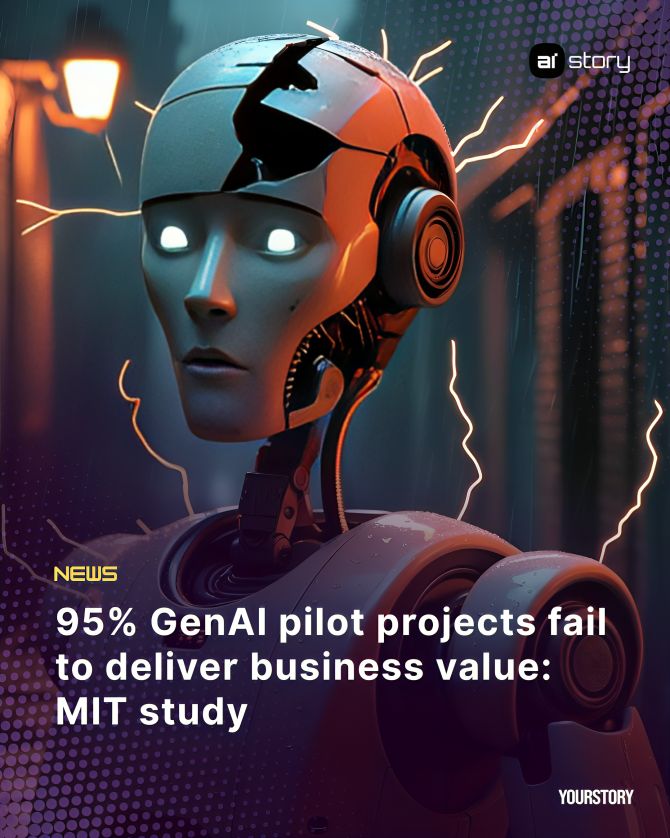
However, a new signal casts doubt on this enthusiasm. A recent MIT study reveals that 95% of generative AI pilots fail to produce any significant revenue or profit impact. Instead of transformative results, many companies end up with dashboards, pilot projects that stall, internal skepticism, and a growing suspicion that the excitement surrounding AI mirrors the dot-com bubble: initial optimism, huge capital influx, and eventual disappointment, with only a select few surviving.
Does this indicate that AI is merely another bubble? Or is the revolution simply postponed, waiting for the right execution models and organizational maturity? The answer likely lies somewhere in between.
In this article, we will explore:
- What the MIT findings truly reveal — and their limitations
- Why many AI pilots fail — focusing on integration challenges, organizational friction, and unrealistic expectations
- Whether we are currently experiencing an AI bubble
- How Gartner’s frameworks for AI prioritization and maturity can guide companies through this landscape
- Recommendations for business leaders in Europe and the U.S. navigating this environment

What the MIT Study Really Says (and Doesn’t)
Key Findings
- The study, part of MIT’s NANDA “GenAI Divide: State of AI in Business 2025,” surveyed executives, evaluated AI initiatives, and assessed their outcomes.
- It indicates that 95% of generative AI pilot projects showed no measurable profit impact, with about 5% achieving what the authors describe as “rapid revenue acceleration.”
- The main issue isn’t necessarily the capabilities of the algorithms. Rather, the report highlights a “learning gap” between AI tools and enterprise workflows: the tools often don’t adapt properly, and organizations typically fail to integrate them into fundamental processes.
- Moreover, many companies allocate their AI budgets to sales and marketing, where it’s harder to pinpoint gains. In contrast, the most reliable returns tend to come from back-office automation and cost management, such as reducing reliance on external agencies and streamlining operations.
- The study also points out the rise of “shadow AI,” where employees use consumer AI tools outside of official IT channels, complicating governance and measurement.
Caveats & Critiques
- Some argue that the 95% failure rate may be exaggerated or misunderstood. Critics often contend that the study might overstate struggling deployments while underestimating intermediate successes.
- AI value doesn’t always show up in profit and loss statements immediately. Some benefits, like improved decision-making, risk management, and time savings, are difficult to quantify in the short term.
- The sample may also lean toward large, risk-averse companies with rigid processes that are hard to change. Startups or agile mid-sized businesses might achieve better outcomes.
- The study emphasizes pilot projects rather than large-scale implementations. Many of these pilots are exploratory and might not have been intended for scaling.
Still, the headline is difficult to ignore: many AI efforts today are not delivering the expected business results.
Why So Many AI Pilots Fail: Anatomy of the Gaps
The MIT insights align with long-standing observations about the challenges faced by data projects, automation initiatives, and digital transformations. Below are common reasons for failure and how they appear in AI:
- Poor Workflow Integration and the “Last Mile” Gap
An advanced model or chatbot is ineffective if it doesn’t integrate well with existing systems, user interfaces, or decision flows. AI that works in isolation often falters at the “last mile,” where humans need to utilize it in their daily tasks. Without feedback loops and adaptation, the tool becomes limited.
2. Organizational Resistance and Change Friction
Implementing AI often disrupts roles, responsibilities, and power dynamics. Resistance can emerge from middle management, fears of job loss, or simple reluctance to change. Innovation is often restricted to “innovation labs” detached from the broader business, preventing scaling.
Today’s logistics economy rewards innovators. Technology is no longer considered a luxury; it is the foundation of competitiveness. Those who use tools like process intelligence increase their resilience, visibility, and agility. These characteristics are crucial in marketplaces experiencing change, uncertainty, and increased customer demands.
Firms that fail to innovate risk falling behind. Manual oversight cannot keep up with the complexities of global logistics. While competitors streamline and optimize, laggards lose money, customers, and reputation. In a business where every second counts, inefficiency may soon become the costliest liability.
Technology enables logistics organizations to not only survive, but grow. Businesses achieve long-term growth by combining data and action. others that act early have a competitive advantage over others who wait until inefficiencies destroy value.
3. Misaligned Metrics and Expectations
Executives may expect returns that are too ambitious or savings that are unrealistic too soon. Many AI benefits are incremental, involving reductions in cycle times, error avoidance, and freeing up human capacity. Unrealistic goals can lead to disappointment and project cancellations.
4. Data, Infrastructure, and Operational Gaps
Many companies lack clean, integrated data pipelines, version control, model monitoring, and operational capabilities like ModelOps and DataOps. AI struggles to grow in fragmented, outdated environments.
5. Over-spreading and Lack of Focus
Attempting to do “AI everything” often results in diluted efforts. Instead of addressing a specific, high-impact problem efficiently, companies may launch numerous weak pilots that lack traction. The MIT study notes that the successful 5% tended to focus on a single pain point and addressed it effectively.
6. Governance, Risk, and Compliance Issues
Regulatory bodies, compliance teams, and security departments often slow down AI initiatives, particularly in sensitive sectors like finance, healthcare, and insurance. In regions with strict privacy or AI regulations, like some European countries, these barriers can be even more pronounced.

Is AI a Bubble That Will Pop?
The similarities to the dot-com bubble are striking: hype, overvaluation, overly optimistic forecasts, and a correction that leaves only a few winners.
Some signs indicate that we might be approaching a maturation phase:
-Overinvestment and inflated valuations of AI startups imply that capital is being driven more by hype than by fundamentals.
-As more deployments stall, buyers might become cautious, slowing down momentum.
-Technology cycles typically overshoot before stabilizing.
However, several factors suggest that AI is more than just a bubble:
-Foundational advancements (LLMs, multimodal models, agentic architectures) are genuine and continue to evolve.
-Demand for AI remains high; many workflows seem ready for change.
-Even if many pilots fail, the successes could have a substantial impact, slowly shifting perspectives.
-Unlike speculative dot-com ventures, AI can integrate into essential enterprise infrastructure, making it harder to separate.
Overall, while some projects and firms will fail, the driving force behind AI is not going away. We may just be experiencing a difficult learning phase.
How Gartner’s AI Prioritization and Maturity Framework Can Help
To navigate the challenges and succeed, organizations need structured frameworks. Gartner, a respected authority in enterprise technology, offers tools and models that assist in prioritization, maturity assessment, and execution planning. Below is how you can apply a Gartner-inspired approach.
AI Maturity Model and Roadmap
Gartner’s AI Maturity Model and Roadmap Toolkit enables organizations to assess readiness across seven areas: strategy, product, governance, engineering, data, operational models, and culture. The aim is not to do everything at once but to identify gaps and prioritize investments logically.
Their AI Roadmap tool organizes initiatives into workstreams and recommends which tasks to focus on based on maturity level.
GenAI Project Focus Approach
Gartner has created a GenAI project-focus strategy to help leaders prioritize AI initiatives based on maturity and strategic fit. The key takeaway is to avoid picking “moonshot” projects first; instead, focus on use cases that are feasible in the current environment.
Use Case Prioritization and Scoring
Gartner emphasizes structuring use case evaluations using a combination of:
- Business Value / Strategic Impact: How much revenue increase, cost savings, risk reduction, or competitive advantage can this create?
- Feasibility / Readiness: How mature is the data? How clean is the pipeline? How well do you understand the end-users? How strong is the governance?
- Risk and Complexity: Security, compliance, explainability, ethics, model stability, integration challenges.
- Time to Value: How quickly can this be implemented and validated?
Leaders can score each potential use case along these dimensions (often using a weighted decision matrix) and filter based on strategic alignment. A common approach is to start with the “low-hanging fruit” — tasks that require moderate effort but have a high likelihood of success and visible outcomes.
Governance and Portfolio Oversight (Right.AI)
Gartner’s Right.AI consulting solution supports AI governance and helps manage portfolios of use cases from ideation to prioritization, scoring, alignment, and tracking. It incorporates decision frameworks that consider value, cost, and risk to ensure accountability and transparency in AI investments.
Iteration Over Perfection
Gartner advises companies not to overengineer at first. Use minimum viable models, integrate feedback loops, and iterate. Treat AI deployment as an ongoing learning journey rather than a one-time event.

Recommendations for Business Leaders
If your company is in Europe or the U.S. and is considering or already testing AI, here’s a recommended approach to reduce risk and improve the chances of success:
1. Avoid heavily investing in “moonshot” projects initially. : Start with one or two high-potential, narrowly defined use cases. Achieving success there can build credibility, funding, and organizational strength.
2.Conduct a thorough maturity assessment. : Identify where you have gaps in data, infrastructure, model operations, user experience, governance, and culture. Use a maturity model like Gartner’s to guide your investment strategy.
3.Use a prioritization framework from the start. : Score potential use cases based on value, feasibility, risk, and time to value. Regularly review and adjust priorities within your portfolio.
4.Ensure strong C-suite support and cross-functional collaboration. : AI initiatives must bridge both business and technical areas. Avoid isolated “AI labs” that fail to integrate into operations.
5.Establish integration and feedback loops early. : Make sure that data pipelines, user interfaces, monitoring, and human intervention are included in the design from the beginning.
6.Embrace iteration and modular deployment. : Release minimal versions, test them, make improvements, and then expand. Avoid trying to perfect a model in isolation before launching it.
7.Monitor ethics, compliance, and governance. : Especially in Europe, regulatory risks are significant. Make sure to include safeguards, transparency measures, audit trails, and engage stakeholders.
8.Recognize and leverage “shadow AI.” : Instead of combating employees who use consumer AI tools, offer safe, controlled alternatives. Understand that innovation can stem from grassroots initiatives.
9.Be patient and realistic. : AI typically does not produce quick wins. Many benefits are incremental and take time to accumulate.
10.Learn from the 5% who succeed. : Examine case studies of organizations that have transitioned from pilots to scalable solutions. What sectors did they focus on? How did they manage change? How did they organize model operations? Imitate successful strategies.

Conclusion
The MIT study’s alarming 95% failure rate for AI pilots serves as a warning to executives who thought that new models alone could quickly bring in revenue. However, this does not imply that AI is just a temporary trend. It highlights that strategy, structure, and governance—not just hype—will determine success.
For most organizations, the difference between the 95% that fail and the 5% that succeed comes down to one crucial factor: execution discipline. The future will favor those who view AI as a long-term capability instead of a short-term project. Those who integrate operational intelligence, process clarity, and business cohesion will outlast the current excitement and shape the future of AI.
At Zenotris, we help businesses achieve this. Our Process Intelligence-driven AI framework connects vision with action, converting pilots into profits, data into decisions, and excitement into tangible results. Whether you are starting your first AI project or scaling up automation, we offer guidance based on evidence, clear ROI paths, and ongoing performance tracking.
Be among the 5% that make AI work for growth, not just for headlines.