
Industry Context
Sector: German Discrete Manufacturing
Region: Germany
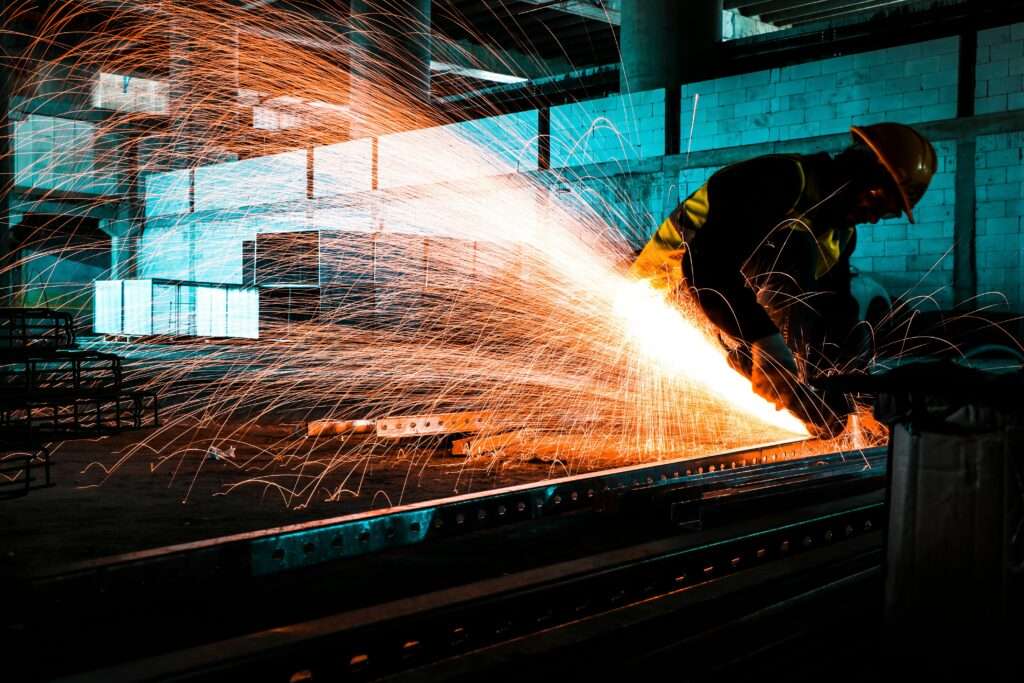
German manufacturing is globally recognised for engineering precision, structured processes, and disciplined execution. Production systems are tightly controlled. Tolerances are exact. Planning accuracy is a cultural expectation.
Yet even in this highly structured environment, one large German plant faced an unexpected challenge:
Production delays were spreading across lines — despite stable internal performance.

Today’s logistics economy rewards innovators. Technology is no longer considered a luxury; it is the foundation of competitiveness. Those who use tools like process intelligence increase their resilience, visibility, and agility. These characteristics are crucial in marketplaces experiencing change, uncertainty, and increased customer demands.
Firms that fail to innovate risk falling behind. Manual oversight cannot keep up with the complexities of global logistics. While competitors streamline and optimize, laggards lose money, customers, and reputation. In a business where every second counts, inefficiency may soon become the costliest liability.
Technology enables logistics organizations to not only survive, but grow. Businesses achieve long-term growth by combining data and action. others that act early have a competitive advantage over others who wait until inefficiencies destroy value.
The The Business Problem
The facility maintained:
- High machine availability
- Strong quality metrics
- Experienced planning teams
- Long-standing supplier contracts
However, operational symptoms were increasing:
- Frequent short-notice rescheduling
- Idle time on otherwise healthy lines
- Sudden overtime spikes later in the week
- Volatile daily production attainment
At first glance, nothing inside the factory appeared broken.
The Initial Assumption
Leadership suspected isolated supplier issues.
A late component here.
A transport delay there.
But procurement reports showed supplier on-time delivery above 90%.
The conclusion was uncomfortable:
If suppliers were mostly on time, why was the production schedule unstable?
The Overlooked Dynamic: Variability Propagation
Zenotris approached the issue differently.
Instead of measuring average supplier performance, we analysed how variability moved through the plan-to-produce process.
We connected:
⚪ Supplier delivery timestamps
⚪ Material availability confirmations
⚪ Production order release times
⚪ Line sequencing decisions
⚪ Downstream dependency constraints
The findings were systemic rather than dramatic.
- Small supplier delays (8–24 hours) forced production resequencing
- Resequencing disrupted optimised changeover groupings
- Downstream assemblies waited for single missing components
- Planning buffers were applied inconsistently across product families
Individually, each disruption was manageable.
Collectively, they created ripple effects across multiple lines.
The issue was not supplier failure.
It was the amplification of minor variability inside the plant.
Why Precision Systems Can Be Sensitive
Highly optimised German production systems often run with tight buffers to maximise efficiency.
While this reduces excess inventory, it increases sensitivity to input timing.
Without end-to-end visibility, planners responded reactively:
- Pulling forward alternative jobs
- Splitting production batches
- Inserting urgent replacements
Each action protected short-term output — but destabilised the weekly plan.
What Process Intelligence Revealed
The Intervention: Absorbing Variability Without Chaos
Zenotris helped the plant redesign coordination between procurement and production planning by:
⚪ Mapping supplier variability impact by component criticality
⚪ Introducing dynamic risk indicators for production orders
⚪ Aligning safety buffers with real dependency sensitivity
⚪ Reducing unnecessary schedule reshuffling
Importantly, no supplier contracts were changed.
The improvement came from managing variability propagation — not eliminating variability itself.

Measurable Impact (Within 120 Days)
⚪ Noticeable reduction in mid-week rescheduling
⚪ Improved daily production stability
⚪ Lower overtime volatility
⚪ Stronger alignment between procurement and operations
The plant regained schedule predictability without increasing overall inventory.
Why This Matters for German Manufacturers
In precision-driven environments, even minor upstream variability can cascade into major operational disruption.
Average supplier performance metrics rarely show this risk.
Process Intelligence exposes how small timing deviations propagate through tightly coupled production systems — enabling proactive coordination rather than reactive firefighting.
Strategic Takeaway
Delays do not need to be large to be costly.
In highly optimised plants, small supplier variability can cascade across production and erode schedule stability.
Zenotris helps German manufacturers stabilise plan-to-produce processes by making variability visible — and manageable — without increasing excess buffers.