
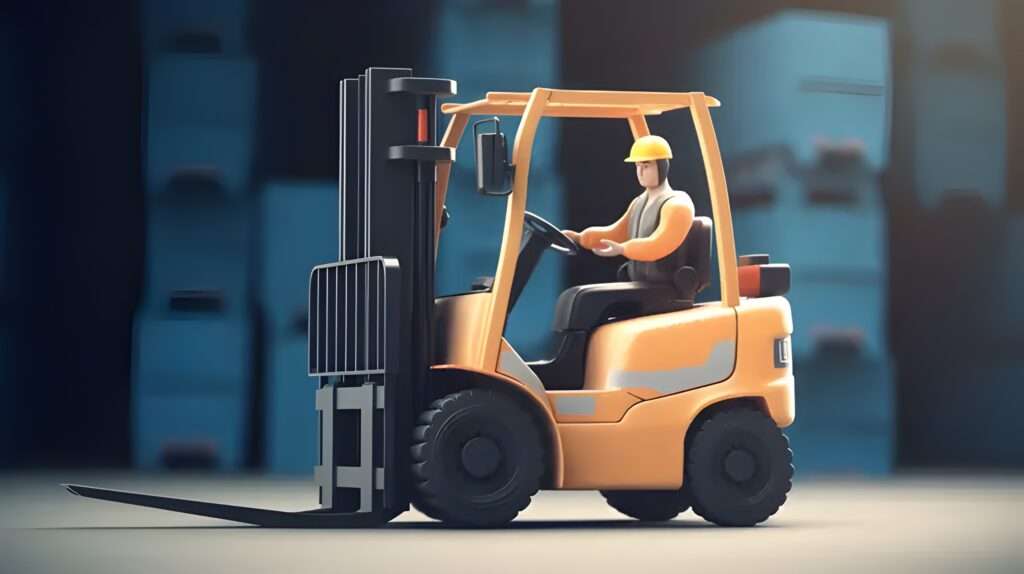
A UK distribution centre case study on congestion, queue time, and layout-driven delays
Case Study Snapshot
Industry: Warehousing & Distribution
Region: United Kingdom
Facility Type: Regional Distribution Centre (DC)
Core Issue: Forklift idle time and congestion
Zenotris Capability: Process intelligence for material handling analysis
Primary Outcome: Reduced queue time and smoother internal flow
Change Type: Process and layout logic — no capex investment
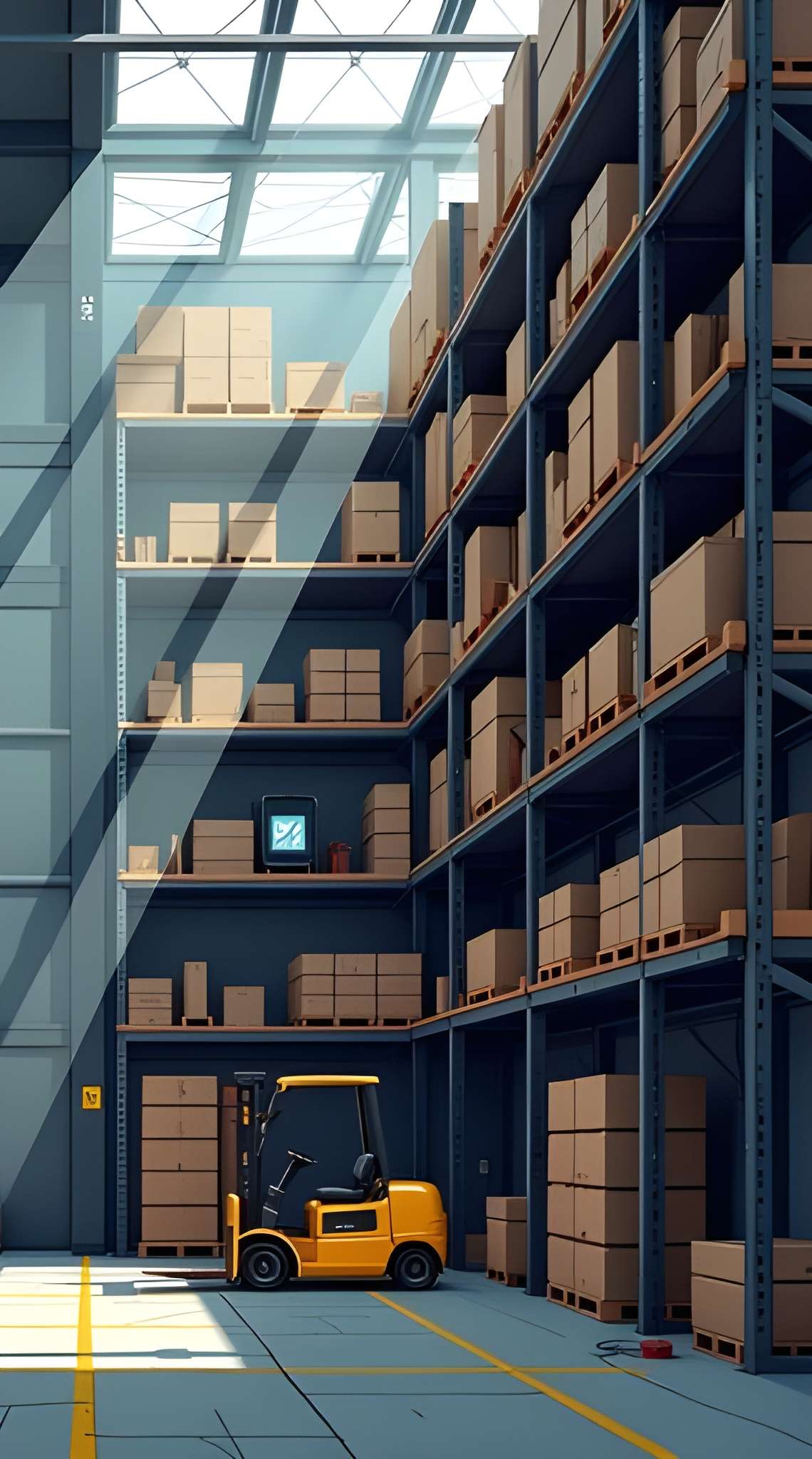
Today’s logistics economy rewards innovators. Technology is no longer considered a luxury; it is the foundation of competitiveness. Those who use tools like process intelligence increase their resilience, visibility, and agility. These characteristics are crucial in marketplaces experiencing change, uncertainty, and increased customer demands.
Firms that fail to innovate risk falling behind. Manual oversight cannot keep up with the complexities of global logistics. While competitors streamline and optimize, laggards lose money, customers, and reputation. In a business where every second counts, inefficiency may soon become the costliest liability.
Technology enables logistics organizations to not only survive, but grow. Businesses achieve long-term growth by combining data and action. others that act early have a competitive advantage over others who wait until inefficiencies destroy value.
The Operational Mystery: Busy Forklifts, Slow Flow
The client operated a large UK distribution centre handling high pallet volumes across inbound, storage, and outbound operations.
Despite having:
- Adequate forklift fleet size
- Trained operators
- Stable daily volumes
The DC consistently experienced:
- Forklifts waiting in queues
- Congestion at aisle intersections
- Delays feeding picking and dispatch zones
- Operators reporting “nothing to do” during peak hours
From the outside, the warehouse looked busy.
Inside, material flow was stalling.
Why the Problem Was Hard to See
Traditional warehouse analysis focused on:
- Forklift utilisation percentages
- Operator productivity per shift
- Equipment availability reports
These metrics suggested normal performance.
What they failed to show was:
- Where forklifts were waiting
- How long queues formed at specific locations
- Which layout decisions were creating repeated delays
The inefficiency was spatial and temporal, not visible in standard KPIs.
Zenotris Approach: Treating Forklift Movement as a Process
Zenotris applied process intelligence to material handling operations, reconstructing forklift movement as an execution process, not just equipment usage.
Using event-level data from:
⚪ Warehouse Management System (WMS) task assignments
⚪ Forklift task start and completion timestamps
⚪ Location and zone transition logs
Zenotris created a time-based process model showing:
⚪ Queue formation points
⚪ Waiting time between tasks
⚪ Repeated congestion loops
⚪ Movement patterns caused by layout constraints
This revealed how forklifts actually navigated the DC, not how the layout was designed to work.
What the Analysis Revealed
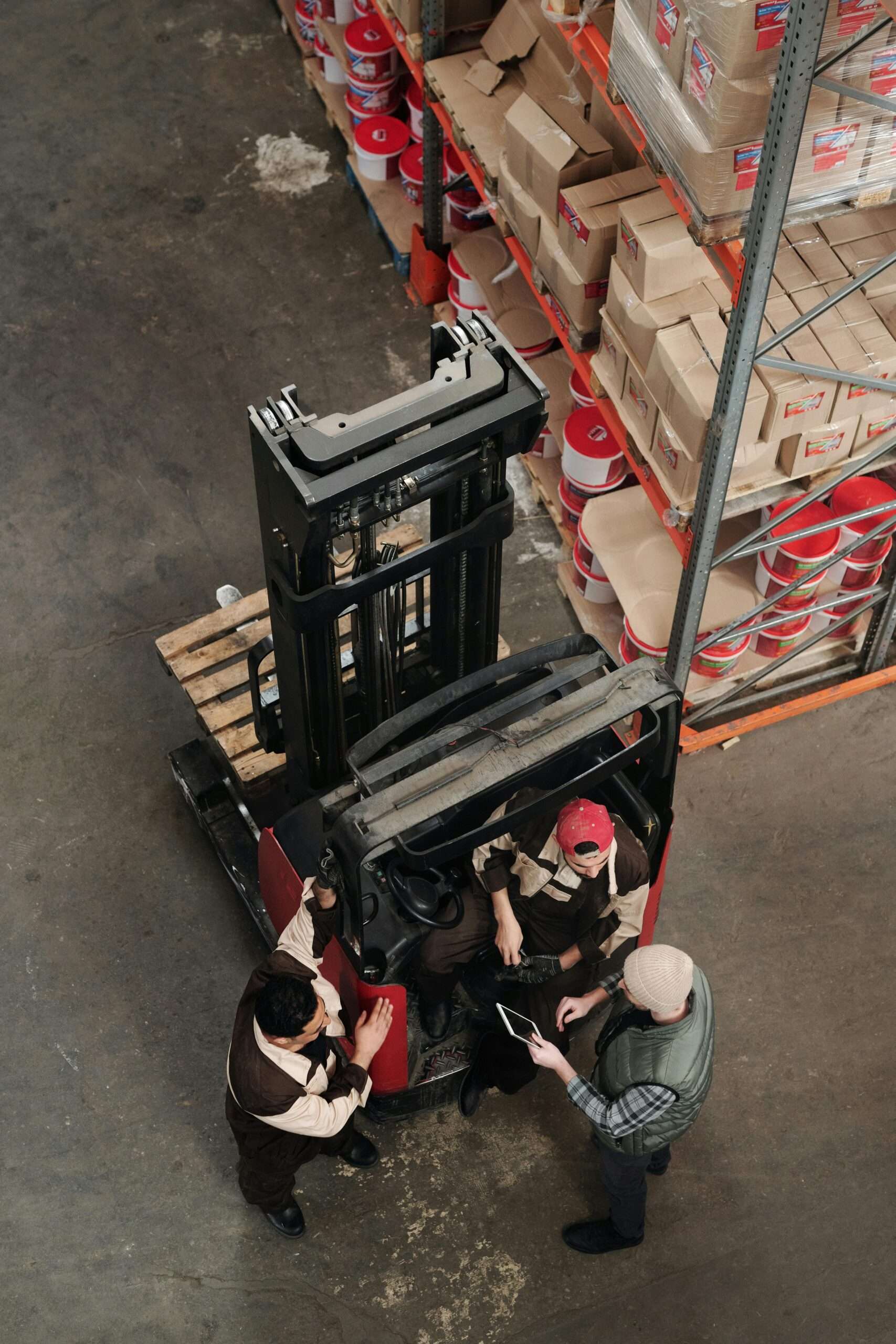
Process intelligence uncovered several invisible bottlenecks:
⚪ Specific aisle intersections consistently created queues
⚪ Forklifts waited for access to shared staging zones
⚪ Putaway and replenishment tasks clashed during peak windows
⚪ Layout forced unnecessary cross-traffic between inbound and picking
Critical Insight
Forklifts were not underutilised — they were blocked by the way work and space interacted.
A small number of physical choke points caused cascading delays across the DC.
Zenotris worked with warehouse operations to introduce low-disruption improvements, including:
- Resequencing task release to avoid zone clashes
- Time-separating putaway and replenishment activities
- Adjusting travel paths to reduce cross-traffic
- Redefining priority rules for shared staging areas
No new forklifts.
No warehouse expansion.
No layout reconstruction.
Operational Impact
Following implementation, the distribution centre achieved:
- Significant reduction in forklift queue time
- Smoother flow between inbound, storage, and picking zones
- Faster replenishment cycles
- Reduced internal congestion during peak hours
Most importantly, the DC regained predictable material movement, improving downstream picking and dispatch reliability.
Corrective Actions Implemented
Why This Case Is Different
This was not about:
⚪ Throughput targets
⚪ Labour optimisation
⚪ Delivery performance
It was about understanding how physical layout and process timing interact — and how small changes unlock hidden capacity.
Process intelligence made waiting visible.
Why Process Intelligence Works for Material Handling
⚪ Forklift inefficiencies are process-driven, not operator-driven
⚪ Bottlenecks repeat daily at the same locations
⚪ Event data already exists in WMS task logs
⚪ Improvements can be executed without capital investment
This engagement transformed forklift management from reactive supervision to flow-based optimisation.
What This Means for UK Warehouse & DC Leaders
If your DC experiences:
⚪ Forklifts waiting despite high activity
⚪ Congestion with no clear cause
⚪ Pressure to add equipment or space
⚪ Operator frustration during peak periods
The issue is likely layout-driven process friction, not performance.
Zenotris helps UK distribution centres identify invisible bottlenecks and restore flow using process intelligence.