

Industry Context
Sector: UK Discrete Manufacturing
Region: United Kingdom
In high-value UK manufacturing, on-time delivery (OTD) is often seen as the ultimate operational benchmark.
In this case, the factory consistently achieved acceptable delivery performance.
Customers were satisfied.
Yet the CFO raised a different concern:
Working capital was rising — and too much cash was sitting inside production.

Today’s logistics economy rewards innovators. Technology is no longer considered a luxury; it is the foundation of competitiveness. Those who use tools like process intelligence increase their resilience, visibility, and agility. These characteristics are crucial in marketplaces experiencing change, uncertainty, and increased customer demands.
Firms that fail to innovate risk falling behind. Manual oversight cannot keep up with the complexities of global logistics. While competitors streamline and optimize, laggards lose money, customers, and reputation. In a business where every second counts, inefficiency may soon become the costliest liability.
Technology enables logistics organizations to not only survive, but grow. Businesses achieve long-term growth by combining data and action. others that act early have a competitive advantage over others who wait until inefficiencies destroy value.
The The Business Problem
The manufacturer had:
- Stable demand patterns
- Acceptable on-time delivery metrics
- No major quality crisis
- No significant equipment downtime
But financial indicators showed:
- Rising WIP inventory month after month
- Longer internal throughput time
- Increased borrowing pressure to fund operations
Operationally stable. Financially strained.
The Illusion of “On-Time Means Healthy”
Because customer delivery targets were being met, internal flow issues were overlooked.
Orders were released aggressively to protect OTD.
Production started early “just in case.”
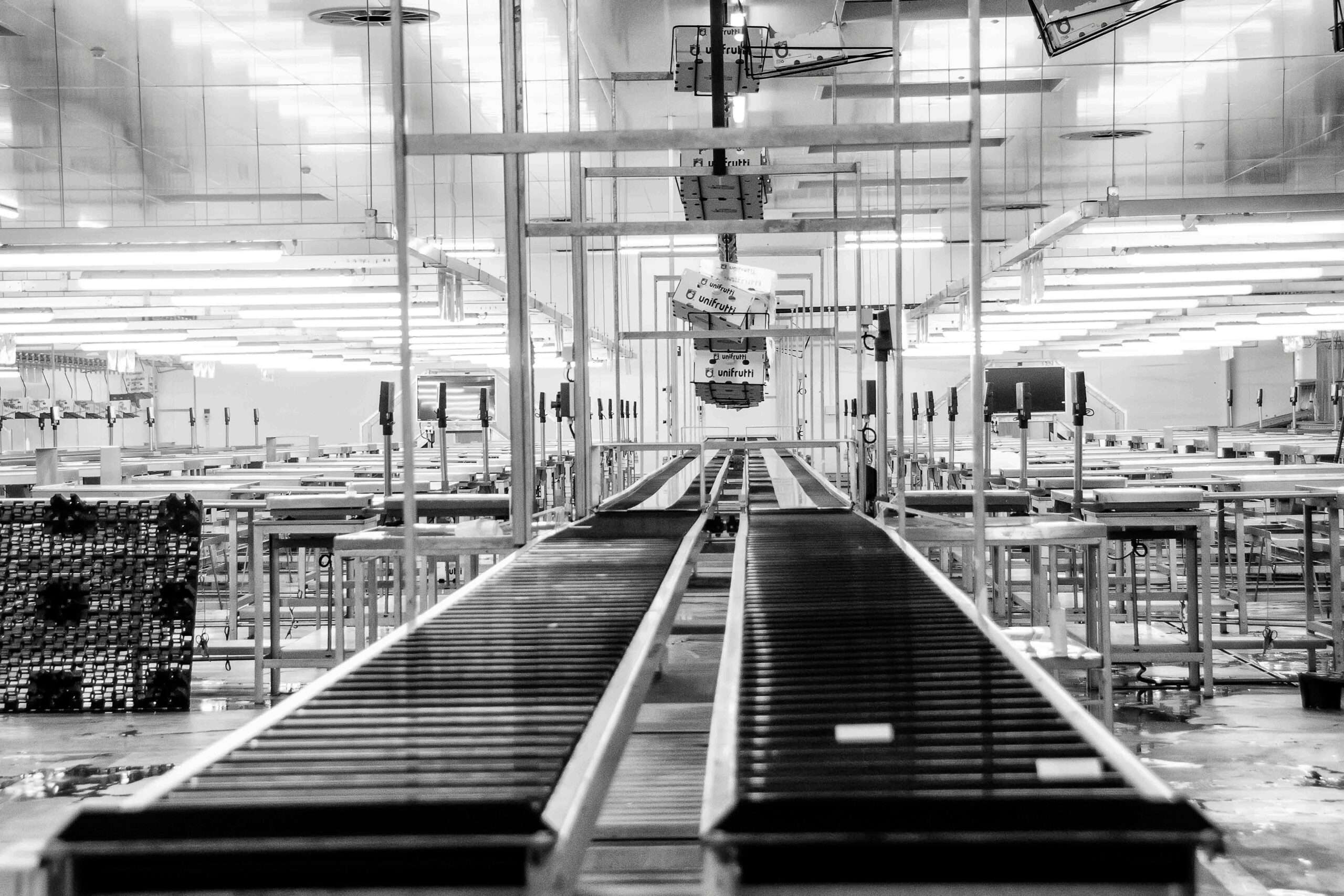
Buffer stock accumulated between stages.
The system prioritised customer deadlines — but ignored internal synchronisation.
The Core Question
Zenotris examined one simple but powerful issue:
Were production orders being released based on downstream readiness — or upstream convenience?
To answer this, we analysed:
⚪ Order release timestamps from ERP
⚪ Actual production start and completion times
⚪ Queue duration before each downstream stage
⚪ Quality release timing
The findings were consistent across multiple product families:
- Orders were released in large weekly batches
- Downstream stages lacked the capacity to absorb the volume immediately
- Parts waited in queues for days before value was added
- Production planners had no visibility of real-time bottlenecks
The factory was technically “on time.”
But internally, it was overproducing ahead of true need.
WIP had become insurance against uncertainty.
The Cost of Excess Internal Insurance
Holding unfinished goods created:
- Increased working capital lock-up
- Space congestion on the shop floor
- Higher handling and internal transport effort
- Reduced flexibility when priorities changed
Nothing looked broken.
But flow was unbalanced.
What Process Intelligence Revealed
The Intervention: Controlled Order Release
Zenotris supported the operations team in shifting from volume-based release to readiness-based release.
Key changes included:
⚪ Linking order release thresholds to downstream queue limits
⚪ Introducing visual dashboards showing real-time stage saturation
⚪ Aligning planning cadence with actual processing capacity
⚪ Reducing early starts that created idle WIP
No reduction in output targets was required.
The focus was timing — not volume.
Measurable Impact (Within 90 Days)
⚪ 20% reduction in average WIP inventory
⚪ Significant working capital release
⚪ Shorter internal lead times
⚪ Improved production stability without sacrificing OTD
The business remained on-time — but became financially healthier.
Why This Matters for UK Manufacturers
In engineering-led environments, protecting delivery performance is critical.
But when order release is disconnected from downstream readiness, WIP becomes a silent financial burden.
Process Intelligence makes internal flow visible — allowing manufacturers to protect service levels while freeing trapped cash.
Strategic Takeaway
On-time delivery does not automatically mean operational balance.
When cash is building up on the shop floor, the issue is often coordination between planning and execution — not demand, quality, or machine performance.
Zenotris helps UK manufacturers rebalance order release decisions, reduce excess WIP, and unlock working capital without capital expenditure.