

Industry Context
Sector: Netherlands Logistics + Manufacturing Hybrid
Region: Netherlands
The facility operated at the intersection of manufacturing and logistics.
It produced a wide range of configurable products while also managing rapid outbound fulfilment requirements.
Product variety was a competitive advantage.
But it was also becoming an operational burden.
Order volumes were healthy. Demand was stable.
Yet the planning team felt increasingly overwhelmed.
Complexity was rising faster than control.

Today’s logistics economy rewards innovators. Technology is no longer considered a luxury; it is the foundation of competitiveness. Those who use tools like process intelligence increase their resilience, visibility, and agility. These characteristics are crucial in marketplaces experiencing change, uncertainty, and increased customer demands.
Firms that fail to innovate risk falling behind. Manual oversight cannot keep up with the complexities of global logistics. While competitors streamline and optimize, laggards lose money, customers, and reputation. In a business where every second counts, inefficiency may soon become the costliest liability.
Technology enables logistics organizations to not only survive, but grow. Businesses achieve long-term growth by combining data and action. others that act early have a competitive advantage over others who wait until inefficiencies destroy value.
The The Business Problem
The plant specialised in high-mix, low-to-medium volume production. Each week included:
- Dozens of product variants
- Custom configurations
- Variable routing paths
- Tight delivery commitments
Operational symptoms began to appear:
- Frequent last-minute schedule adjustments
- Increasing expediting requests
- Uneven daily output performance
- Planner workload intensifying despite digital tools
Machines were not failing. Demand was not volatile.
The constraint was coordination under complexity.
The Initial Assumption: Too Many Variants
Leadership initially believed product portfolio breadth was the root cause.
Discussions emerged around:
⚪ Rationalising SKUs
⚪ Increasing batch sizes
⚪ Reducing custom options
But market differentiation depended on flexibility.
The issue was not variety itself.
It was how sequencing logic handled that variety.

Looking Inside Scheduling Behaviour
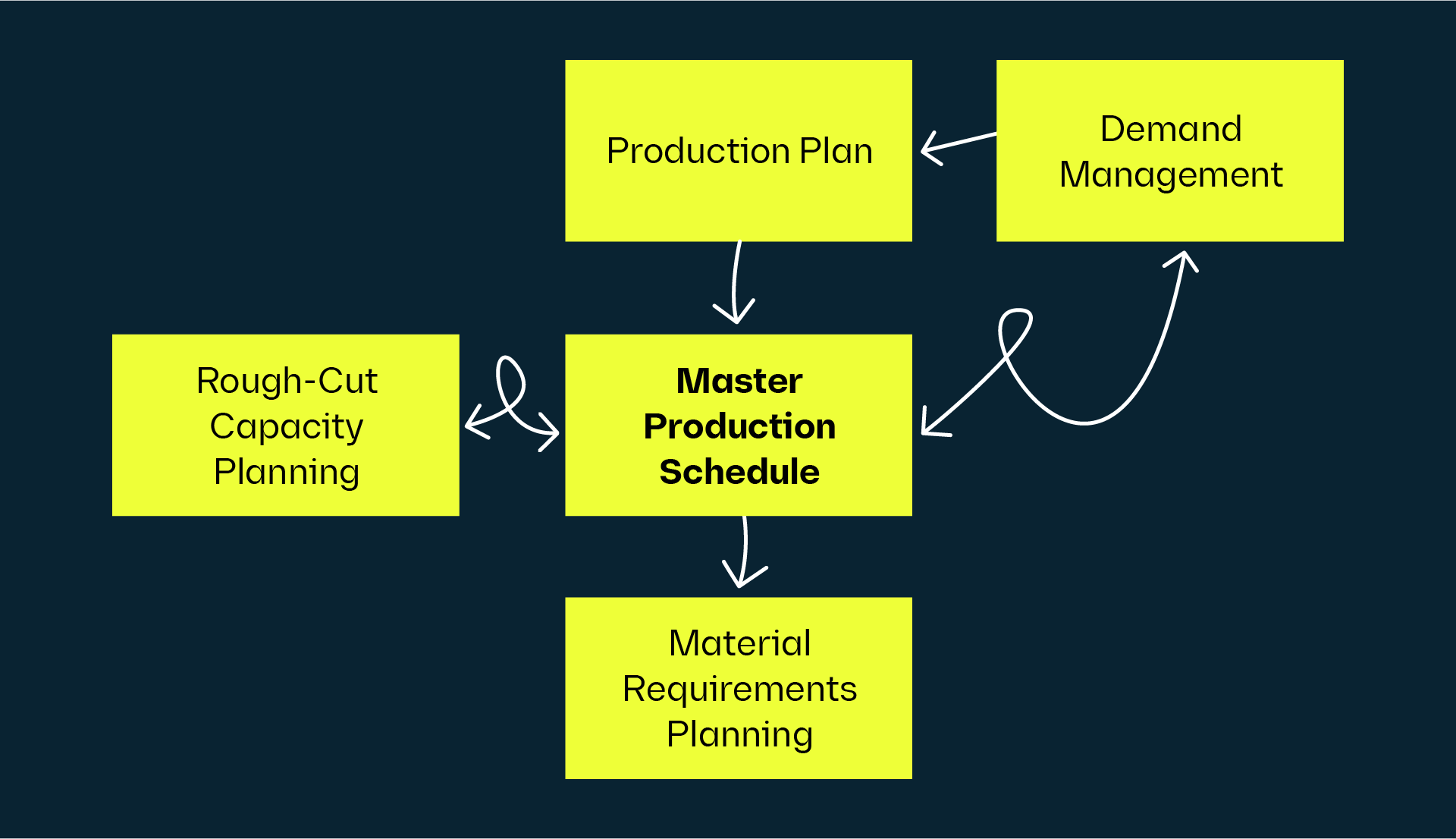
Zenotris analysed how production orders were actually sequenced and resequenced across the week.
We mapped:
⚪ Order release timing
⚪ Routing overlaps across work centres
⚪ Changeover patterns
⚪ Logistics pickup windows
⚪ Manual planner interventions
Instead of reviewing the final schedule, we examined how often it changed — and why.
The plant’s planning system generated an initial optimised schedule.
However, real-world adjustments quickly overrode it.
Key findings included:
- High-priority logistics windows triggered reactive resequencing
- Similar product families were split across days, increasing setup frequency
- Local workstation constraints forced mid-day reshuffling
- Planners manually adjusted sequences to “protect” certain orders
Each change was logical in isolation.
Collectively, they reduced flow stability.
The system was technically advanced — but lacked dynamic sequencing intelligence to adapt without disruption.
Why High-Mix Environments Amplify Scheduling Risk
In high-mix discrete manufacturing, small sequencing shifts have multiplied effects:
- Setup frequency increases
- Material staging becomes inconsistent
- Logistics coordination becomes reactive
- Planner workload compounds
Traditional scheduling tools optimise for static assumptions.
High-mix environments are anything but static.
What Process Intelligence Revealed

The Intervention: Dynamic Sequencing Intelligence
Zenotris introduced a layer of process intelligence designed to:
⚪ Detect instability patterns in sequencing behaviour
⚪ Quantify the cost of mid-cycle schedule changes
⚪ Cluster similar orders dynamically based on live conditions
⚪ Provide planners with scenario-based decision support
The objective was not to eliminate flexibility.
It was to manage it deliberately.
Measurable Impact (Within 100 Days)
⚪ 9% throughput improvement
⚪ Reduced frequency of mid-week resequencing
⚪ Lower planner workload intensity
⚪ More predictable daily output rhythm
The plant maintained its product variety — while restoring control.
Why This Matters for Dutch High-Mix Manufacturers
The Netherlands is home to many hybrid manufacturing-logistics environments where speed and flexibility define competitiveness.
But flexibility without sequencing intelligence leads to hidden capacity erosion.
As product mix increases, static planning models reach their limits.
Process Intelligence enables dynamic adaptation without operational chaos.
Strategic Takeaway
Complexity is not the enemy.
Unmanaged sequencing complexity is.
Zenotris helps high-mix manufacturers transform reactive scheduling into intelligent coordination — delivering measurable throughput gains without reducing product variety or increasing labour.